
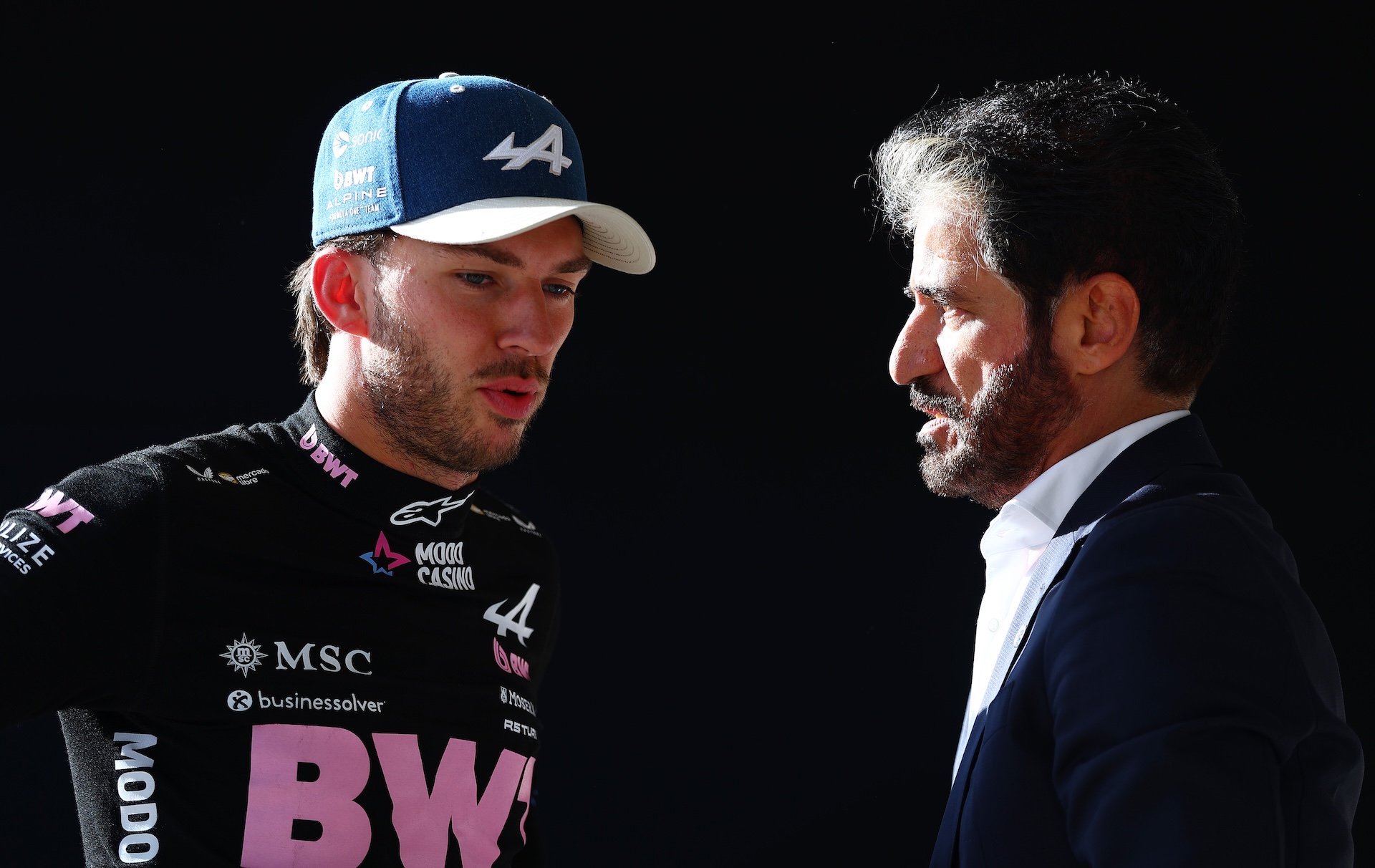
When Formula 1 driver Pierre Gasly seemed to hold up his Alpine teammate Franco Colapinto in the closing stages of the Spanish Grand Prix in early September, Colapinto’s fan base was not happy. Gasly’s move triggered an unthinkable barrage of death threats not just against the French racer, but also his girlfriend and immediate family. In a recent interview with FIA president Mohammed Ben Sulayem, The Drive learned the number of death threats was in the thousands.
“Pierre Gasly had 13,000 threats on his life—13,000! If we fight this alone, we will fail; we can’t do it alone,” Ben Sulayem told The Drive during the Austin race weekend. “You know, for someone who is hiding in his father’s garage somewhere [and engages in online abuse] because a driver was trying to come into a corner? I mean, we had a woman steward who was threatened to be killed and raped, so she said, ‘it’s not worth it.’ These are volunteers.”
This level of online abuse is prevalent in global sports, and federations, governments, and, of course, the people on the receiving end of this hate are scrambling to find meaningful solutions. The perpetrators are many; they’re all over the world and can extremely easily hide behind screen names, fake social media accounts, and forums that foster this hate while also keeping their real identities hidden.
“We risk losing the sport to online abuse, and that’s where we need you [fans and media],” added Ben Sulayem. “We did United Against Online Abuse, and we have to use a lot of AI technology to expose these online abusers. There’s no place for them because if we don’t do something, our sport will be beyond repair.
“The mission is awareness and education—and not only from the FIA—but we also have to use our power. If the hate comes from someone who is a spectator, we ban them [from races, events, official platforms, etc.]. If they are part of the media, we ban them because we have the authority. And if they are hiding [on the internet], AI will expose them. If you expose one, I guarantee you [they will all] be afraid.”
Argentinian fans have been singled out as the worst offenders, and that’s certainly been the case in altercations involving Colapinto, who is the country’s most recent pride and joy. Before him, it was IndyCar racer Agustin Canapino, whose career suffered greatly after Argentinian fans unleashed a tsunami of online hate on anyone who clashed with him.
That said, this level of online abuse isn’t limited to one country, one fanbase, or one demographic. It’s a global epidemic that surfaced in F1 decades ago but was never taken seriously. If you’ve watched the sport long enough, you’ll remember some of the abuse and racism Lewis Hamilton endured early in his career, with one of the most disgusting examples being Spanish fans wearing monkey masks to races and displaying billboards with racist remarks. Today, the sport and the FIA take this more seriously, and Ben Sulayem emphasizes that meaningful results come only when everyone fights together.
In this most recent case, Alpine F1 Team boss Flavio Briatore made a clear, decisive decision against Colapinto’s abusive fan base: Continue the online hate against Gasly or any other driver, and Colapinto will be placed on a media blackout. That means no interviews, no social media coverage, and no access or TV coverage whatsoever. It worked. When asked if he wished more team principals issued ultimatums like that, the FIA president alluded to yes, but also asked other parties to be just as decisive.
“Not only the principal,” Ben Sulayem emphasized. “The F1 drivers have fans, and the drivers can say to the fans: ‘Stop, I don’t want you to be my fan if you are not behaving, if you are using death threats.’ Drivers also have responsibility because they are ambassadors; they are role models, and protecting another driver also protects them. We, the FIA, have responsibility; the teams have responsibility; you [the media] have responsibility.”
He’s not wrong. For an audience that craves mainstream and behind-the-scenes coverage of its favorite stars, a media blackout could certainly prove a point. However, this would also put teams and drivers in a bind, since their sponsors spend tens of millions of dollars on that exposure. So, what gives?
“We have to work together,” Ben Sulayem concluded.
Email the author at [email protected]
The post 13,000 Death Threats in an F1 Driver’s Inbox: FIA President Gets Real About the Dark Side of Fame appeared first on The Drive.